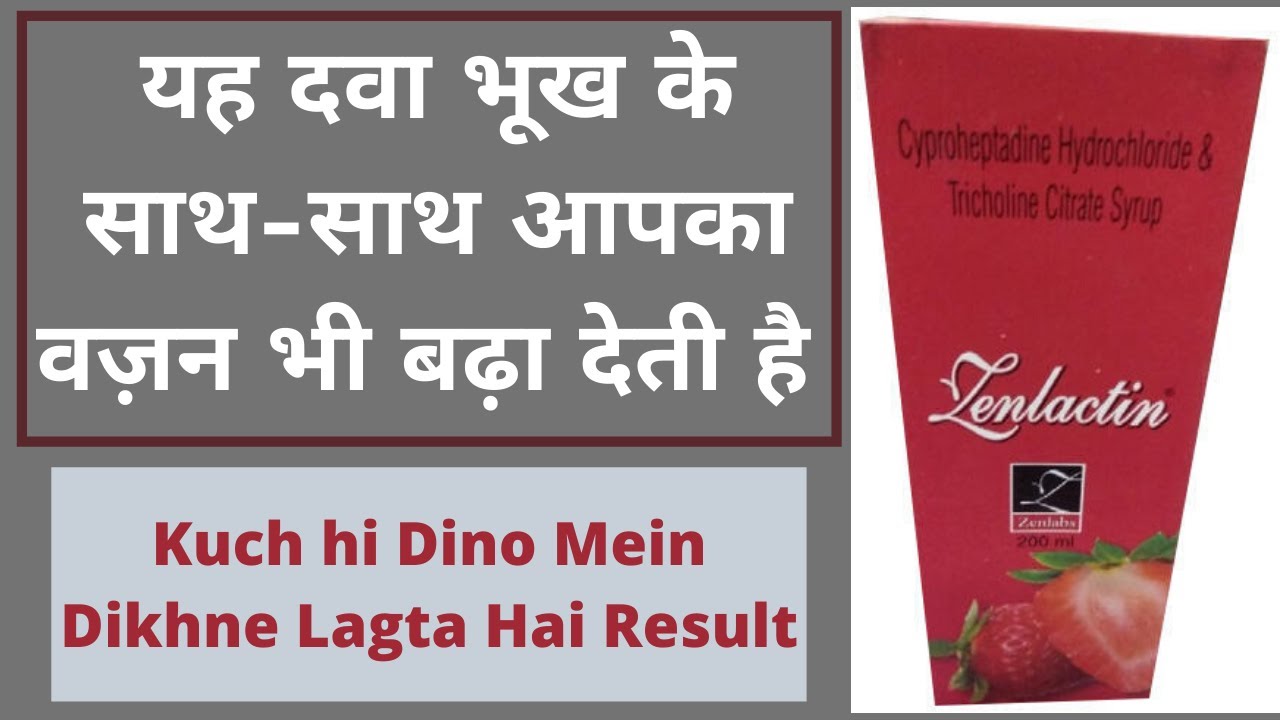
Zenlactin Syrup is an appetite-stimulating syrup that combines cyproheptadine with tricholine citrate. Doctors may prescribe it for children or adults who eat poorly and are underweight. It does not fix the cause of a poor appetite, so the first step is always to find out why someone is not eating.
Key Takeaways
- Each 5 ml is listed as containing cyproheptadine 2 mg and tricholine citrate 275 mg.
- It is used for loss of appetite, weight loss and poor growth, mostly in children, under a doctor’s guidance.
- Drowsiness, dry mouth, dizziness and constipation are the most commonly reported side effects.
- It should not be given to newborns or premature babies, and people with glaucoma, prostate problems, stomach ulcers or urinary difficulty need caution.
- Avoid alcohol and be careful with driving or any task that needs alertness.
What Is in Zenlactin Syrup?
| Ingredient (per 5 ml) | Amount | Role |
|---|---|---|
| Cyproheptadine | 2 mg | Antihistamine that also increases appetite |
| Tricholine citrate | 275 mg | Described on listings as a bile-acid binding agent |
The pharmacy listing names Zenlabs Ethica Ltd (Chandigarh) as the marketer. Confirm the strength on your own bottle, as products with the same name can differ.
What Is Zenlactin Syrup Used For?
The listing describes it as an appetite stimulant for loss of appetite, weight loss and poor growth, especially in children. It is also mentioned as a way of supporting weight gain during long illnesses such as tuberculosis or HIV treatment.
Cyproheptadine is first of all an antihistamine, used for allergy symptoms such as a runny nose, sneezing and itching. Its effect on appetite is the reason it is prescribed this way. The syrup is a short-term support, not a solution on its own.
How Does It Work?
Cyproheptadine reduces the effect of serotonin in the part of the brain that regulates appetite (the hypothalamus), which can make a person feel hungrier. Tricholine citrate is described as binding bile acids. How much it adds to the appetite effect is not clear from the listing, so rely on your doctor’s judgement about whether this combination is right.
How to Give or Take It
- Use the dose and duration your doctor advises.
- Shake the bottle well and measure with the measuring cup or a proper oral syringe, not a kitchen spoon.
- It can be taken with or without food.
- Do not increase the dose to get a faster result, as an overdose can be dangerous, especially in young children.
Possible Side Effects
Because cyproheptadine is an antihistamine, the usual effects are drowsiness, dizziness, dry mouth, nose or throat, constipation and blurred vision. Medical references also list nausea, headache and nervousness. Children can sometimes become excited or restless instead of sleepy. Seek help if there is difficulty passing urine or vision problems.
Who Should Avoid It or Be Careful?
- Newborns and premature babies.
- Anyone allergic to cyproheptadine or any ingredient.
- People with glaucoma, an enlarged prostate, urinary difficulty, stomach ulcers or asthma.
- People with heart disease, high blood pressure, seizures or an overactive thyroid.
- People with kidney or liver disease, who may need a lower dose.
- Older adults. Medical guidance says adults aged 65 and above usually should not take cyproheptadine because safer options exist.
- Pregnant women, who should consult a doctor, and breastfeeding mothers, who should use it with caution.
Alcohol can increase drowsiness. Medicines that cause sleepiness, such as sedatives, can add to the effect, so tell your doctor everything the patient is taking.
Is a Poor Appetite Always a Reason for a Syrup?
Often it is not. In children, poor appetite can come from constant snacking or milk, worms, anaemia, constipation, infections or simple fussiness. In adults it can follow stress, depression, medicines or an illness. If appetite loss is sudden, lasts weeks, or comes with weight loss, fever or tiredness, a doctor should look for the cause before an appetite stimulant is used.
Frequently Asked Questions
Can I give Zenlactin to my child without a prescription?
No. Children’s doses depend on age and weight, and the medicine can cause drowsiness or excitement. Give it only as your paediatrician advises.
Will it make my child gain weight?
It may increase appetite, and weight can follow if the child eats more. It is not a growth medicine and does not replace a balanced diet.
Can I drive after taking it?
It can cause drowsiness and dizziness, so avoid driving or operating machinery until you know how it affects you.
How long should it be used?
For as long as your doctor recommends. It is generally meant for a limited period, with the diet and the cause of poor appetite addressed at the same time.
Conclusion
Zenlactin Syrup can help increase appetite in people who are underweight and not eating enough, but it is a prescription-style medicine with real side effects such as drowsiness. Use it only after a doctor has checked the cause of the poor appetite, follow the measured dose, and keep working on a balanced diet.
References
- Zenlactin Syrup product listing (1mg)
- Cyproheptadine (MedlinePlus, U.S. National Library of Medicine)
This article is for general information only and is not medical advice. Do not start, stop or change any medicine without speaking to a qualified doctor or pharmacist.