If your skin starts feeling tight, flaky and itchy the moment the weather turns cold, you are not alone. Looking for Ayurvedic remedies for dry skin in winter is one of the most common seasonal searches in India from November to February, and for good reason: cold air, low humidity, hot baths and heaters all pull moisture out of the skin. Ayurveda has a clear explanation for this, and a set of simple daily habits that pair well with modern dermatology advice.
Quick answer: In Ayurveda, winter dryness is linked to aggravated Vata dosha (dry, cold, rough qualities). The most useful remedies are daily warm-oil self-massage (abhyanga) with sesame or coconut oil, short lukewarm baths, applying a moisturiser or ghee on slightly damp skin, eating warm, unctuous foods with healthy fats, drinking enough warm water and keeping your room from becoming too dry. If dryness cracks, bleeds, or itches badly, see a dermatologist.
Why Does Skin Get So Dry in Winter?
Modern medicine calls very dry skin xerosis. According to MedlinePlus, common triggers include cold weather, indoor heating, bathing too often and harsh soaps. In winter, all of these come together: we take longer, hotter showers, sit near heaters and drink less water because we don’t feel thirsty.
The Ayurvedic view: Vata season
Ayurveda describes three doshas – Vata, Pitta and Kapha. Vata carries the qualities of dryness, coldness, roughness and lightness. Late autumn and early winter (Hemant and Shishir ritu) are considered times when these qualities increase in the environment, and therefore in the body. Dry skin, cracked lips, rough heels, joint stiffness and even disturbed sleep are classic signs of Vata imbalance. The Ayurvedic principle for balancing Vata is simple: bring in the opposite qualities – warmth, oiliness (snigdha), softness and routine.
9 Ayurvedic Remedies for Dry Skin in Winter
1. Abhyanga: daily warm oil massage
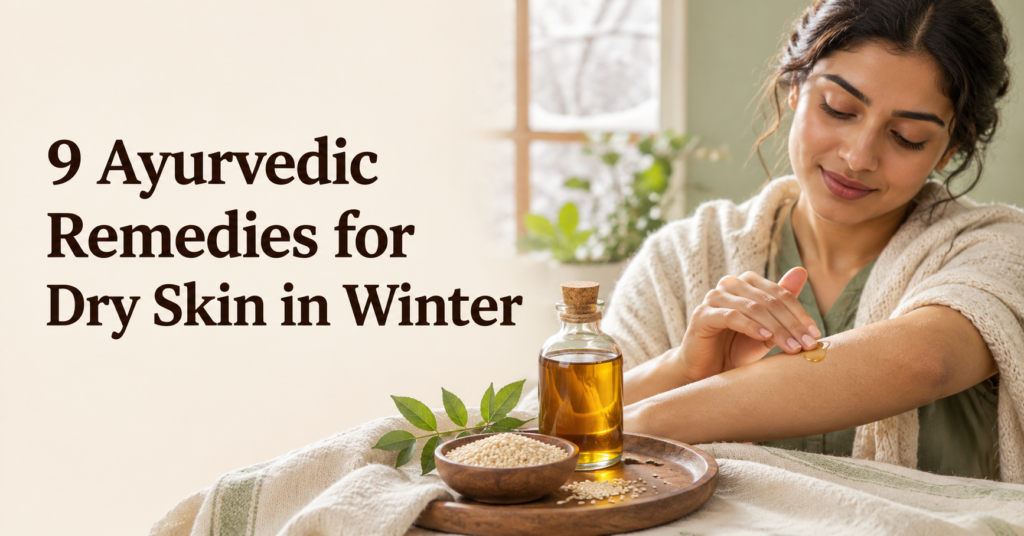
Abhyanga (self-massage with warm oil) is the cornerstone of Ayurvedic winter skincare. Warm 2–3 tablespoons of oil, massage it gently into your whole body for 5–10 minutes, wait 10–15 minutes, and then take a lukewarm bath.
- Sesame oil (til ka tel): traditionally the first choice for Vata; warming and deeply nourishing.
- Coconut oil: lighter and cooling; good for people who feel hot easily or have sensitive skin.
- Almond oil: mild and suitable for the face and for children (patch test first).
If a full-body massage feels like too much, start with just the feet – see our guide on padabhyangam (foot massage) therapy.
2. Keep baths short and lukewarm
A very hot bath feels wonderful in December, but it strips away the skin’s natural oils. Dermatologists recommend short baths with lukewarm water and patting the skin dry instead of rubbing. This matches the Ayurvedic idea of not aggravating dryness further.
3. Replace harsh soaps with ubtan
Strong, fragranced soaps can worsen dryness. A traditional ubtan is a gentle alternative for the body:
- 2 tablespoons besan (gram flour)
- A pinch of turmeric
- Enough raw milk or malai to make a paste
Rub gently on damp skin and rinse. Malai and milk add fat; besan cleanses without stripping. Do a patch test first if you have sensitive skin.
4. Moisturise within minutes of bathing
The single most effective habit is applying moisturiser on slightly damp skin, right after a bath, to seal in water. MedlinePlus notes that creams containing urea or lactic acid can help very dry skin. Ayurvedic options include a thin layer of ghee for very rough patches – our article on using ghee on skin explains how to use it without clogging pores.
5. Aloe vera for itchy, irritated patches
Fresh aloe vera gel is soothing and light. According to NCCIH, topical aloe gel is generally well tolerated, though some people get burning or itching, so test it on a small area first. Read more in benefits of aloe vera on skin.
6. Eat for your skin: warm, unctuous foods
Ayurveda places as much weight on diet as on what you apply. In winter, favour:
- Warm soups, dals, khichdi with a spoon of ghee
- Seasonal foods such as sesame (til), jaggery in moderation, carrots, sweet potatoes and amla
- Soaked almonds and walnuts
- Spices like ginger, cumin and ajwain that support digestion (agni)
Limit very cold, dry and packaged foods (chips, crackers, cold drinks), which Ayurveda says increase Vata. For more ideas see foods for skin nourishment and our seasonal Ayurvedic diet.
7. Drink warm water through the day
Thirst drops in winter, but your skin still needs hydration. Sipping warm or lukewarm water, or herbal infusions such as ginger or tulsi water, is an easy habit.
8. Protect skin from wind and heaters
Cover your hands and face in cold wind, wear cotton layers next to the skin (wool can irritate), and if you use a room heater, keep a bowl of water nearby or use a humidifier so the air doesn’t become extremely dry.
9. Keep a regular routine (dinacharya)
Ayurveda says Vata is calmed by regularity. Sleeping and eating at fixed times, and avoiding late nights, helps the whole body – skin included.
Comparison: Which Oil Suits Your Skin in Winter?
| Oil | Nature (Ayurveda) | Best for | Note |
|---|---|---|---|
| Sesame (til) | Warming, heavy | Very dry, rough body skin; Vata types | Use lightly on oily or acne-prone skin |
| Coconut | Cooling, light | Sensitive skin, people who feel hot | Can solidify in cold; warm it first |
| Almond | Mildly warming | Face, under-eyes, children | Avoid if nut-allergic |
| Ghee | Nourishing, soothing | Lips, heels, rough elbows | Use a very thin layer |
| Mustard | Strongly warming | Traditional body massage in cold regions | Can irritate sensitive skin; patch test |
A Simple 5-Minute Winter Skin Routine
- Morning: warm oil on the body (5 min) → wait 10 min → lukewarm bath with ubtan or mild cleanser.
- Right after bath: pat dry, apply moisturiser on damp skin.
- Daytime: lip balm or ghee on lips; cover hands in the cold.
- Night: a few drops of almond oil on the face; ghee or petroleum jelly on heels with cotton socks.
Who Should Be Careful?
- People with eczema, psoriasis or fungal infections – these are not just “dry skin” and need proper diagnosis.
- People with acne-prone or very oily skin – heavy oils on the face may cause breakouts.
- Anyone with allergies to nuts, sesame or turmeric – always patch test.
- Babies and young children – use only mild oils and ask your paediatrician first.
When to See a Doctor
See a dermatologist if your skin cracks and bleeds, shows signs of infection (redness, pus, warmth), itches so much that it disturbs sleep, or does not improve after two to three weeks of good care. Very dry skin can sometimes be linked to thyroid problems, diabetes or other conditions, and some medicines also cause dryness.
FAQs
Which oil is best for dry skin in winter according to Ayurveda?
Sesame oil is the traditional first choice because it is warming and balances Vata. If you have sensitive skin or feel hot easily, coconut or almond oil may suit you better.
Should I apply oil before or after a bath?
In Ayurveda, oil is applied before the bath (abhyanga) and a light moisturiser after. If you prefer one step, apply a few drops of oil on damp skin right after bathing.
Can I apply ghee on my face in winter?
A very thin layer can soothe rough patches and lips, but it may clog pores in acne-prone skin. Try it on a small area first.
Does drinking water really help dry skin?
Staying hydrated supports overall health, but external moisturising matters most for winter dryness. Do both.
Is turmeric ubtan safe for daily use?
For most people, a mild besan-turmeric-milk ubtan two or three times a week is fine. Stop if you notice redness or irritation.
When is dry skin a sign of something serious?
If dryness comes with intense itching, rashes, bleeding cracks, or other symptoms like fatigue and weight changes, consult a doctor to rule out an underlying condition.
Sources and Further Reading
- MedlinePlus – Dry skin
- American Academy of Dermatology – Dry skin: diagnosis and treatment
- NCCIH – Aloe vera
Disclaimer: This article is for general information only and is not a substitute for medical advice. Please consult a doctor, dermatologist or qualified Ayurvedic practitioner before starting any remedy, especially if you have a skin condition, allergies, are pregnant, or take medicines.