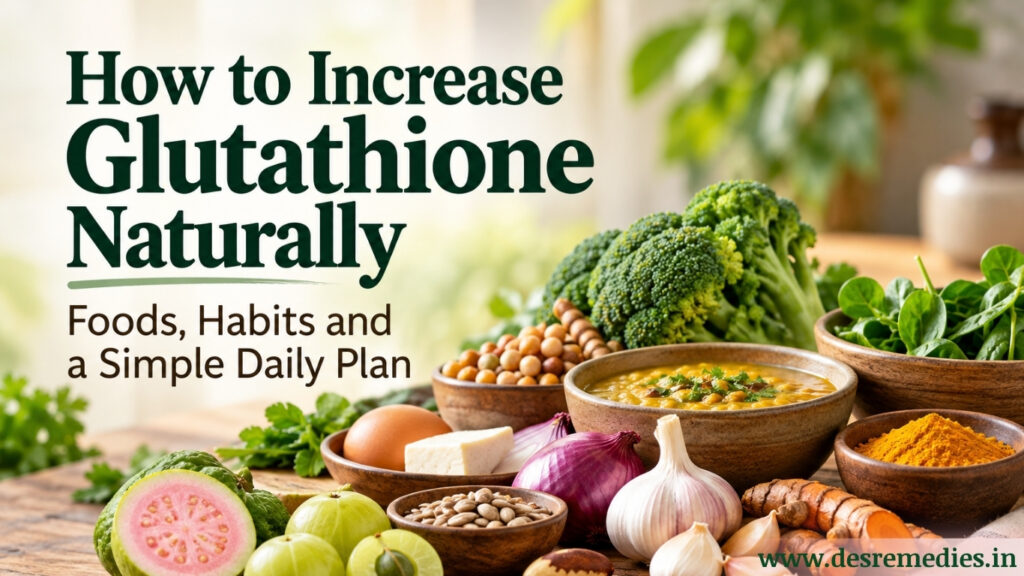
Walk into any wellness shop or scroll social media for five minutes and you will meet glutathione. It is sold as a pill, a powder, and even an injection, usually with promises of glowing skin and overnight detox.
But your body already makes glutathione every day. The better question is not what to buy. It is how to increase glutathione naturally, which really means giving your body what it needs to make it and use it well through food and everyday habits.
Looking back, I realise my grandfather probably never knew the word glutathione, but his simple kitchen had many of the things our bodies need to maintain their natural antioxidant defences: dal, seasonal sabzis, garlic-onion tadka, greens, and unhurried home-cooked meals.
This blog covers what glutathione is, which foods and habits can support it, what drains it, what supplements can and can’t do, and who should be careful.
What is Glutathione, and why does it matter?
Glutathione is a small molecule made inside your cells, mostly in the liver, from three amino acids: cysteine, glutamate and glycine. Cysteine is often considered the key limiting amino acid for glutathione synthesis, so having enough cysteine is important for your body to make glutathione.
Its main roles:
- Neutralising free radicals that damage cells
- Helping the liver process medicines, alcohol and other substances
- Supporting immune cells
- Helping recycle other antioxidants, such as vitamins C and E
Glutathione levels can change with age and may also be affected by factors such as heavy alcohol use, smoking, poor sleep, chronic stress and some illnesses.
Does eating glutathione-rich food help?
Foods such as asparagus, avocado and spinach contain glutathione. But much of it is broken down during digestion, and evidence that eating it substantially raises glutathione levels in the body is limited.
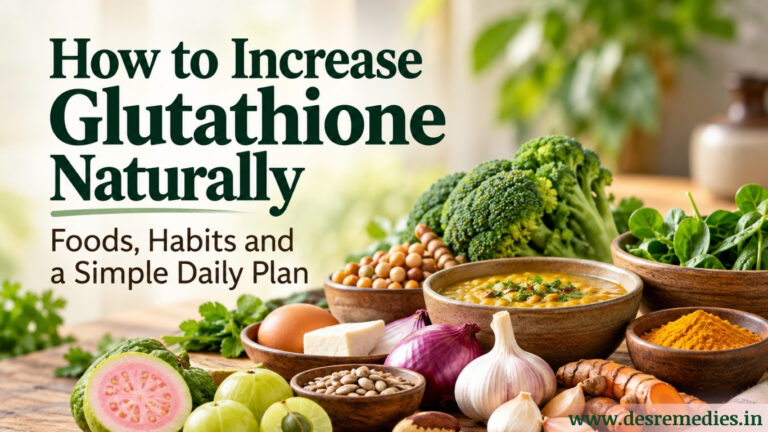
A more sensible approach is to support glutathione production and antioxidant defences by eating the nutrients your body uses to build and recycle it: protein, sulfur-containing foods, vitamin C, selenium and B vitamins. No single food is a fix. What matters is the overall pattern.
7 foods that support glutathione production
1. Garlic and onions
Garlic and onions contain sulfur-containing compounds that may support antioxidant and cellular defence pathways.
- Example portion: Include garlic and onion regularly in your cooking. This is an example of a good habit, not a glutathione prescription.
- Tip: crush or chop garlic and let it rest for about 10 minutes before heating.
- Be careful if: you take blood thinners, have surgery coming up, or get acidity or reflux easily. Raw garlic in large amounts can irritate the stomach.
2. Cruciferous vegetables: broccoli, cabbage, cauliflower, radish
These vegetables contain sulfur-containing compounds, including glucosinolates, that are involved in cellular antioxidant and defence pathways.
- Example portion: ½ to 1 cup cooked, a few times a week
- Tip: light steaming or a quick stir-fry is a good default. Boiling in a lot of water and discarding it can reduce some of the water-soluble compounds.
- Be careful if: you have a thyroid condition, especially if your iodine intake is low. Discuss very large amounts of raw cruciferous vegetables with your doctor.
3. Protein: the source of cysteine and glycine
Without enough protein, the body lacks the building blocks for glutathione.
- Sources: dal, chana, rajma, curd, paneer, milk, tofu
- General guide: about 0.8 to 1 gram of protein per kilo of body weight daily for most healthy adults. Spread protein-containing foods across your meals.
- Be careful if: you have kidney disease. Ask your doctor about your protein limit first.
4. Amla, guava and citrus fruits (vitamin C)
Vitamin C is an antioxidant and helps recycle glutathione so it can keep working.
- Example portion: 1 fresh amla or 1 guava, or a serving of citrus fruit
- Be careful if: you take medicines regularly, particularly ones that affect blood sugar or blood clotting. Check with your doctor before using concentrated amla supplements. Eating amla as a normal food is very different from taking a concentrated extract.
5. Selenium-containing foods
Selenium is needed for glutathione peroxidase, an enzyme that uses glutathione to neutralise harmful peroxides.
- Sources: Sunflower seeds, whole grains
- Brazil nuts: if you eat them, keep the portion small. Often one nut is enough. Selenium content varies considerably between nuts, and more is not better. Too much selenium is harmful, and the adult upper limit is 400 mcg a day.
6. Turmeric with black pepper
Using turmeric as a normal cooking spice is reasonable. Lab studies suggest curcumin may influence glutathione-related pathways, but evidence that turmeric meaningfully raises glutathione in humans is still limited.
- Example portion: ¼ to ½ tsp in cooking, with a pinch of black pepper
- Be careful if: you have gallstones or bile duct problems, or take blood thinners.
7. Whole grains, pulses and leafy greens (B vitamins)
Riboflavin (vitamin B2) and other B vitamins help the enzymes that recycle glutathione. Whole grains, dal, milk, curd, spinach and methi are everyday sources.
Habits that support your antioxidant defences
Sleep 7 to 9 hours. A consistent sleep schedule can support overall metabolic and antioxidant health.
Exercise regularly, in moderation. About 150 minutes a week of moderate activity is the standard adult recommendation. That could be a 30-minute brisk walk five days a week. Very strenuous exercise without adequate recovery can temporarily increase oxidative stress, so balance training with rest.
Manage stress. Ongoing stress adds to the body’s oxidative load. Ten minutes of slow breathing or a phone-free walk is a small habit that adds up.
What drains Glutathione
- Alcohol: processing it uses up glutathione in the liver
- Smoking and tobacco: add to oxidative load
- Crash diets and very low-protein diets: cut off the amino acids your body needs
- Paracetamol overdose: a toxic breakdown product binds to glutathione, and overdose can deplete liver stores and cause serious liver injury. Never exceed the labelled dose.
Related read: Can IV glutathione shots help after heavy drinking? Top liver doctor explains
What about Glutathione supplements?
- Oral glutathione: Some studies suggest oral glutathione can increase glutathione levels, but results have been inconsistent, and the best dose and long-term benefits remain unclear.
- N-acetylcysteine (NAC): It supplies cysteine and is studied for this purpose, but it is a medicine-like supplement. Talk to a doctor first, especially if you have asthma or a bleeding tendency.
- Injections and IV drips: Glutathione injections are sometimes marketed for skin lightening, but this is not a proven or appropriate reason to self-administer them. Injectable products should only be used under appropriate medical supervision.
A simple one-day plan
| Time | What to have / do |
|---|---|
| Morning | Fresh amla or guava, with a protein-rich breakfast (moong dal chilla, eggs, curd or sprouted pulses) |
| Lunch | 1 bowl of dal, 1 cup cooked cruciferous sabzi (cabbage, cauliflower or radish), roti or rice, and fresh curd; onion and garlic in the tadka |
| Evening | A 30-minute brisk walk, followed by a small handful of seeds (like sunflower seeds) or roasted chana |
| Dinner | A light meal: paneer, tofu, leafy greens (palak or methi) and a moderate portion of rice or roti |
| Night | An unhurried wind-down routine, warm water or milk, and a consistent bedtime |
5 mistakes that can work against your efforts
- Relying on capsules while skipping protein and sleep.
- Expecting one “superfood” to do the job. The overall pattern matters more.
- Over-exercising without recovery.
- Juice cleanses and crash diets that are low in protein.
- Expecting quick results. Don’t expect noticeable changes within days. These habits are about supporting overall health rather than chasing a particular glutathione number.
When to see a doctor
Speak to a doctor rather than self-treating if you have:
- Unexplained tiredness, yellowing of the eyes or skin, or dark urine
- A liver, kidney or thyroid condition
- Regular use of blood thinners, diabetes medicines or immunosuppressants
- Pregnancy or breastfeeding, before adding any supplement
Low glutathione is not something you can diagnose at home.
Final thoughts: How to Increase Glutathione Naturally
You don’t need a trend or a drip. Eat enough protein, include garlic, onions and vegetables in your meals, have a vitamin C source daily, sleep on a regular schedule, move your body, and cut back on alcohol and tobacco. That is the practical answer to how to increase glutathione naturally.
Maybe that’s what I remember most about my grandfather’s kitchen: nobody was chasing a “detox.” We were simply eating ordinary food, cooked at home, and letting the body do what it already knows how to do.
If you make just one change this week, add a cup of cooked vegetables with garlic to your lunch and keep a fixed bedtime.
Have you tried any of these habits? Tell me in the comments.
Sources and further reading
- NIH Office of Dietary Supplements: Selenium fact sheet (selenium function, Brazil nuts, 400 mcg upper limit)
- World Health Organization: Physical activity guidelines for adults (150 minutes a week)
- A medical source on paracetamol overdose and liver injury, such as the NHS or a StatPearls entry
Disclaimer: This article is for general information and is not medical advice. Please consult a qualified doctor before making major diet changes or starting any supplement, especially if you have a medical condition, are pregnant or breastfeeding, or take regular medication.