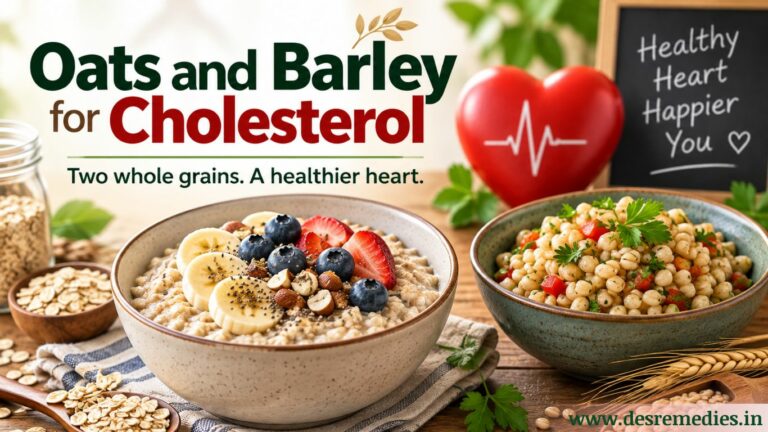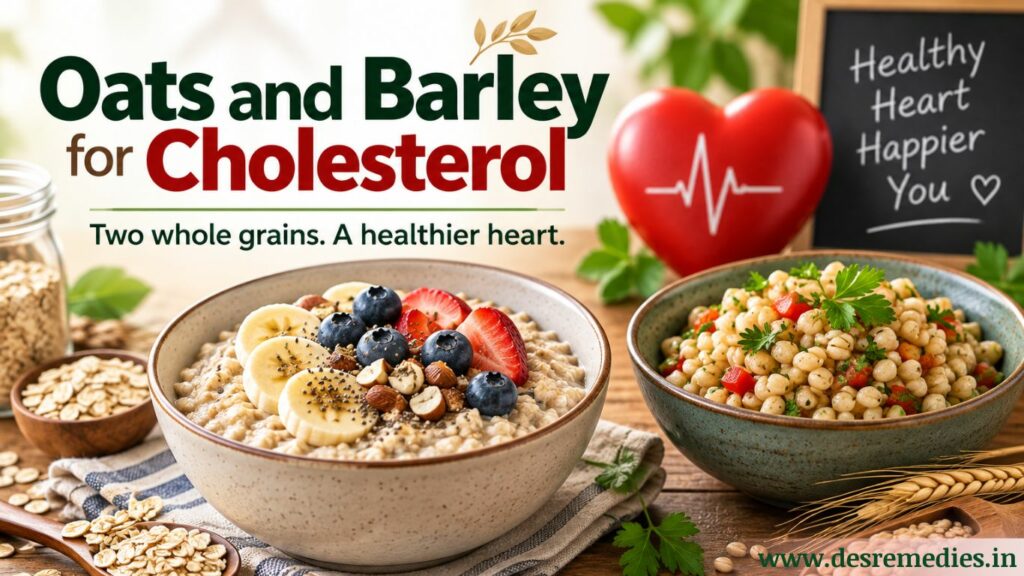
Oats and barley for cholesterol are getting fresh attention thanks to a new study, and the results are worth paying attention to if you care about your heart health. Most of us already know whole grains are “good for us,” but a new study takes it a step further — it looks at real, everyday whole-grain foods, not just fiber supplements, and tracks what actually happens to your cholesterol and blood pressure over time.
In this article, we will break down what the study found, why oats and barley for cholesterol management work differently from each other, and simple ways to add both to your daily meals.
Why This Study on Oats and Barley for Cholesterol Matters
Most earlier research on grains and heart health focused on an isolated fiber compound called beta-glucan, found in both oats and barley. That is useful information, but it does not tell us what happens when people eat actual whole-grain foods — cereal, crackers, or porridge — as part of a real diet.
This is exactly the gap the new study, published in the journal Nutrients, tried to fill. Instead of testing beta-glucan on its own, researchers built full diets around whole-grain oat or barley products and measured the effects on real people over six weeks.
How the Study Was Done
The trial was well controlled. Sixty-eight adults completed a six-week, randomized, double-blind feeding study. They were split into three groups:
- A control group eating a typical American amount of whole grain
- An oat group eating four daily servings of whole-grain oats
- A barley group eating four daily servings of whole-grain barley
All the foods — cereal bars, flakes, puffs, and crackers — were made to look identical, so neither the participants nor the research staff knew who was eating what until the results were analyzed. This kind of “blinding” makes the findings more reliable, since nobody’s expectations could influence the outcome.
Before and after the six weeks, the team measured cholesterol levels, detailed particle counts, inflammation markers, and blood pressure.
What the Study Found About Oats and Barley for Cholesterol
The results showed two grains doing two slightly different jobs for the heart.
Oats Helped Improve Cholesterol Quality
People on the oat diet saw their LDL cholesterol (often called “bad” cholesterol) drop by about 11.2 mg/dL compared to the control group. Even more interesting, oats improved the quality of LDL particles — fewer small, dense particles and a shift toward larger LDL particles. This matters because small, dense LDL particles are considered more likely to damage artery walls, so a shift toward larger particles is a meaningfully positive sign for heart health.
Barley Helped Lower Blood Pressure and Inflammation
The barley group also saw an LDL drop, about 8.9 mg/dL compared to control, but barley’s standout benefit was different. It was linked to a drop in diastolic blood pressure of around 3.0 mm Hg, along with a reduction in a marker called VCAM, which is connected to inflammation in blood vessel walls. Lower inflammation in the vessels is generally linked to better long-term cardiovascular health.
Both Grains Reduced Fat-Carrying Particles
Interestingly, both the oat and barley diets lowered VLDL and chylomicron particles — these are particles that carry fat through the bloodstream. Fewer of these floating around is generally seen as a good sign for heart health, regardless of which grain you choose.
A Few Honest Limitations
It’s worth being upfront here: this was a fairly small study of 68 people, and the main outcome researchers were testing for — improved LDL cholesterol — came close to, but did not fully reach, standard statistical significance. Many of the more striking results came from secondary measurements, which naturally raises the chance that some findings could be due to random variation rather than a true effect.
The researchers themselves are careful to point this out and call for larger, longer studies to confirm what they found. It is also worth noting that the study’s food products were supplied by Kellogg’s, which funded the research — though the paper states the company was not involved in the study design, analysis, or decision to publish. You can read the full study, published in the journal Nutrients, for the complete data and methodology.
In short: this study adds meaningful evidence to what nutrition experts already suspected about oats and barley for cholesterol and blood pressure, but it is one piece of a larger puzzle, not the final word.
Simple Ways to Add Oats and Barley to Your Diet
You don’t need a complicated meal plan to bring these grains into your routine. Here are some easy, realistic ways to do it:
- Start with oatmeal: A warm bowl of oats topped with fruit, seeds, or nuts is an easy way to build a habit around breakfast.
- Try overnight oats: Soak oats in milk or yogurt the night before for a no-cook breakfast you can grab on your way out.
- Blend oats into smoothies: A spoonful of rolled oats adds fiber and a creamy texture without changing the taste much.
- Cook a batch of barley: Prepare a big pot of pearl or hulled barley at the start of the week, then use it as a base for grain bowls, salads, or a side dish.
- Add barley to soups and stews: Barley works especially well in warm, comforting dishes, adding texture along with its fiber content.
- Rotate between the two: Since oats and barley seem to support slightly different parts of heart health, using both across the week — rather than sticking to just one — may help you cover more ground.
Other Habits That Support Healthy Cholesterol and Blood Pressure
Whole grains are a strong foundation, but they work best alongside other heart-healthy habits:
Eat more plants overall. Fruits, vegetables, legumes, and nuts, combined with whole grains, form the backbone of eating patterns known to support healthy cholesterol and blood pressure.
Limit saturated and trans fats. Cutting back on fried foods, processed snacks, and fatty cuts of meat can help keep LDL cholesterol from rising in the first place.
Stay physically active. Regular movement, even a daily brisk walk, supports healthy cholesterol levels and helps your heart work more efficiently.
Watch your sodium intake. Since barley showed a blood pressure benefit in this study, pairing it with a lower-sodium diet overall may amplify the effect.
Get regular check-ups. Cholesterol and blood pressure can quietly rise without obvious symptoms, so periodic testing helps you catch changes early and adjust your diet or lifestyle as needed.
A Quick Word of Caution
While the findings on oats and barley for cholesterol are encouraging, they should not replace medical advice or prescribed treatment. If you have been diagnosed with high cholesterol or high blood pressure, whole grains can be a helpful addition to your diet, but they work best as part of a plan guided by your doctor — not as a substitute for medication or regular monitoring.
The Bottom Line on Oats and Barley for Cholesterol
This new study adds solid, real-world evidence that oats and barley each bring something valuable to the table. Oats appear to support healthier cholesterol particle quality, while barley leans toward lowering blood pressure and reducing inflammation markers. Rather than picking one over the other, rotating both oats and barley for cholesterol and blood pressure support through the week may be the smartest, most realistic approach — especially since both are affordable, easy to find, and simple to cook.