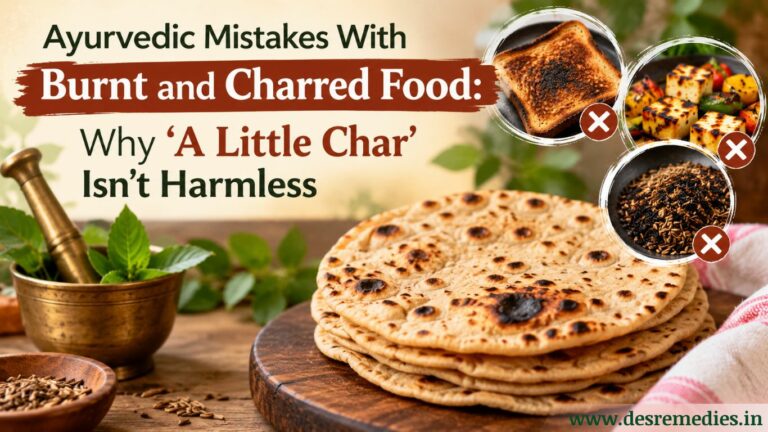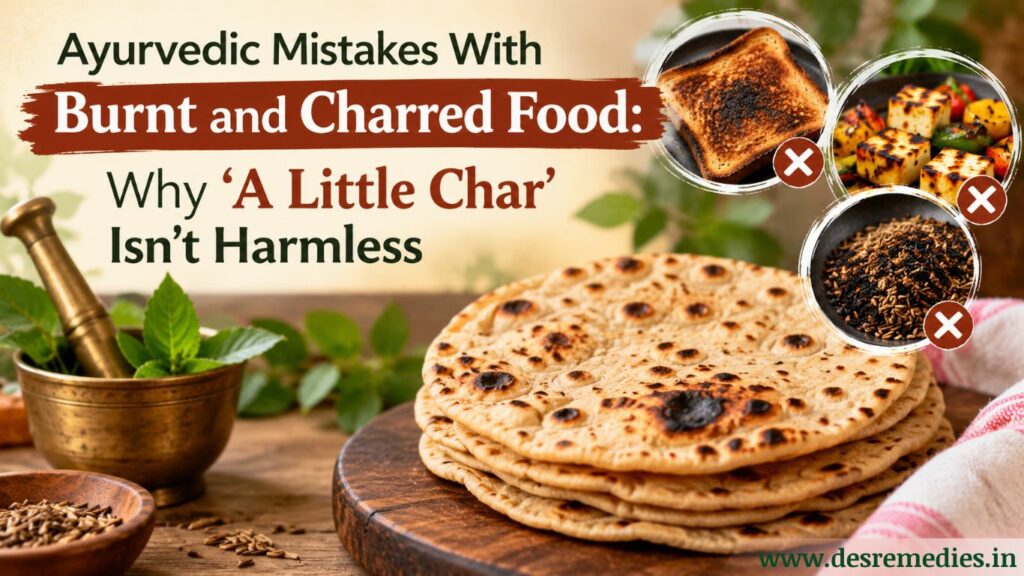
One of the most common Ayurvedic mistakes with burnt food has nothing to do with a blackened dish. Look at your roti the next time it comes off the tawa — those small dark spots you’ve probably never questioned are technically char too. Ayurveda has a lot to say about them, and most of it goes beyond the burnt toast you already know to avoid.
Key Takeaways
- Ayurvedic mistakes with burnt food go beyond obviously blackened dishes — a few dark spots on roti or toast count too, even when they look harmless.
- Ayurveda treats charred food as vidahi (irritating) and guru (heavy), two qualities that work against smooth digestion regardless of quantity.
- Tawa roti, toast, grilled paneer, and over-roasted spices are everyday sources of char that rarely get flagged as a concern.
- The fix isn’t giving up these foods — it’s adjusting heat and trimming visible char before eating.
- Charred food and reused cooking oil strain digestion differently, and often show up in the same meal.
- Because this habit feels minor, it tends to repeat daily for years without anyone questioning it.
What Are the Most Common Ayurvedic Mistakes With Burnt Food?
The most common Ayurvedic mistakes with burnt food aren’t limited to something visibly blackened — they include any food that’s picked up dark, dry-heat marks during cooking. A few spots on a roti qualify just as much as a burnt piece of toast, even though only one of these would ever get thrown away.
This distinction matters because most kitchen habits are built around the extreme case. People know to avoid a fully blackened dish. Far fewer people think to question a roti that’s cooked the exact same way it has been for years, dark spots included.
Why Does a Small Amount of Char Still Matter?
A small amount of char still matters because the difference between light and heavy charring is one of degree, not of kind. The same dry, high-heat process is responsible for both — a few seconds too long on the tawa produces a mild version of what several minutes too long would produce on a grill.
The scale is what throws people off. Nobody plans to eat a burnt meal, but a slightly charred roti with breakfast and a slightly over-toasted slice with lunch, repeated for years, adds up differently than either the fully blackened dish people already avoid.
How Does Charred Food Affect Digestion, According to Ayurveda?
Charred food places extra demand on Agni, the digestive fire Ayurveda treats as central to how efficiently food gets broken down. Two specific qualities are responsible. Char is considered vidahi, meaning irritating to the digestive tract, and guru, meaning heavy and slow to process.
Neither effect is obvious after a single meal, which is part of why this habit goes unquestioned. The concern builds through repetition — daily roti, regular toast, the occasional grilled snack — until the cumulative load starts to outpace what Agni can comfortably manage. Ayurveda connects this kind of imbalance to Ama, a sticky residue left behind when digestion can’t fully keep up. Anyone noticing inconsistent digestion might find it worth checking signs your digestive fire is running low against this pattern.
Which Everyday Foods Are Most Likely to Carry Hidden Char?
A handful of common foods carry char that rarely gets identified as such:
- Tawa roti — daily dark spots are usually read as normal browning, not char.
- Toast — a shade darker than usual still counts, even without visible black patches.
- Grilled paneer and vegetables — char marks are often treated as a flavor feature rather than a concern.
- Over-roasted whole spices — cumin or coriander left slightly too long before grinding can tip into light char.
- Tandoor and barbecue food — more visibly charred, but eaten more often than most people track.
Charred Food vs. Reused Oil: Which Matters More?
Neither charred food nor reused, reheated oil is automatically the bigger issue — they strain digestion through different routes. Reused oil becomes heavy mainly through repeated heating and, separately, through poor storage like sitting near heat or sunlight. Char comes directly from dry, high heat contacting the food itself, independent of oil at all.
In practice, the two rarely stay apart. A pakora fried in oil that’s already been reused, cooked with slightly charred edges from too-high heat, carries both problems at once. This overlap is exactly why Ayurvedic mistakes with burnt food are worth addressing alongside oil habits, not instead of them — see Ayurvedic mistakes with cooking oil for the storage side of this.
What Are Simple Ways to Reduce Char Without Giving Up These Foods?
None of this calls for cutting out roti, toast, or grilled food entirely. A few adjustments are usually enough:
- Lower the tawa heat slightly and let roti cook a little longer, rather than fast on high.
- Trim the darkest spots before eating, even when it feels unnecessary.
- Pull spices off the pan a beat earlier — a lighter roast still delivers full flavor.
- Keep tandoor and grilled food occasional rather than a daily default.
- Start paying attention — most people underestimate how often char shows up until they actually look for it.
Char Is a Heat Problem, Not a Food Problem
Once this becomes visible on roti or toast, it tends to show up elsewhere too — a dosa left a little too long, a paratha edge gone extra crisp, spices that sat on the pan past their moment. The common thread across all of it is heat and timing, not any single ingredient. Catching that pattern matters more than following a strict list of foods to watch.
Conclusion
Most Ayurvedic mistakes with burnt food are easy to miss precisely because they don’t look like mistakes at all. A blackened dish is easy to spot and easy to avoid. A faint char mark on your everyday roti is not, which is exactly why it goes unnoticed for years. None of this requires giving up tawa roti, toast, or your favorite grilled food. A slightly gentler flame, a habit of trimming the darker spots, and a bit more attention at the stove ask less of your Agni — without asking you to change what you eat.